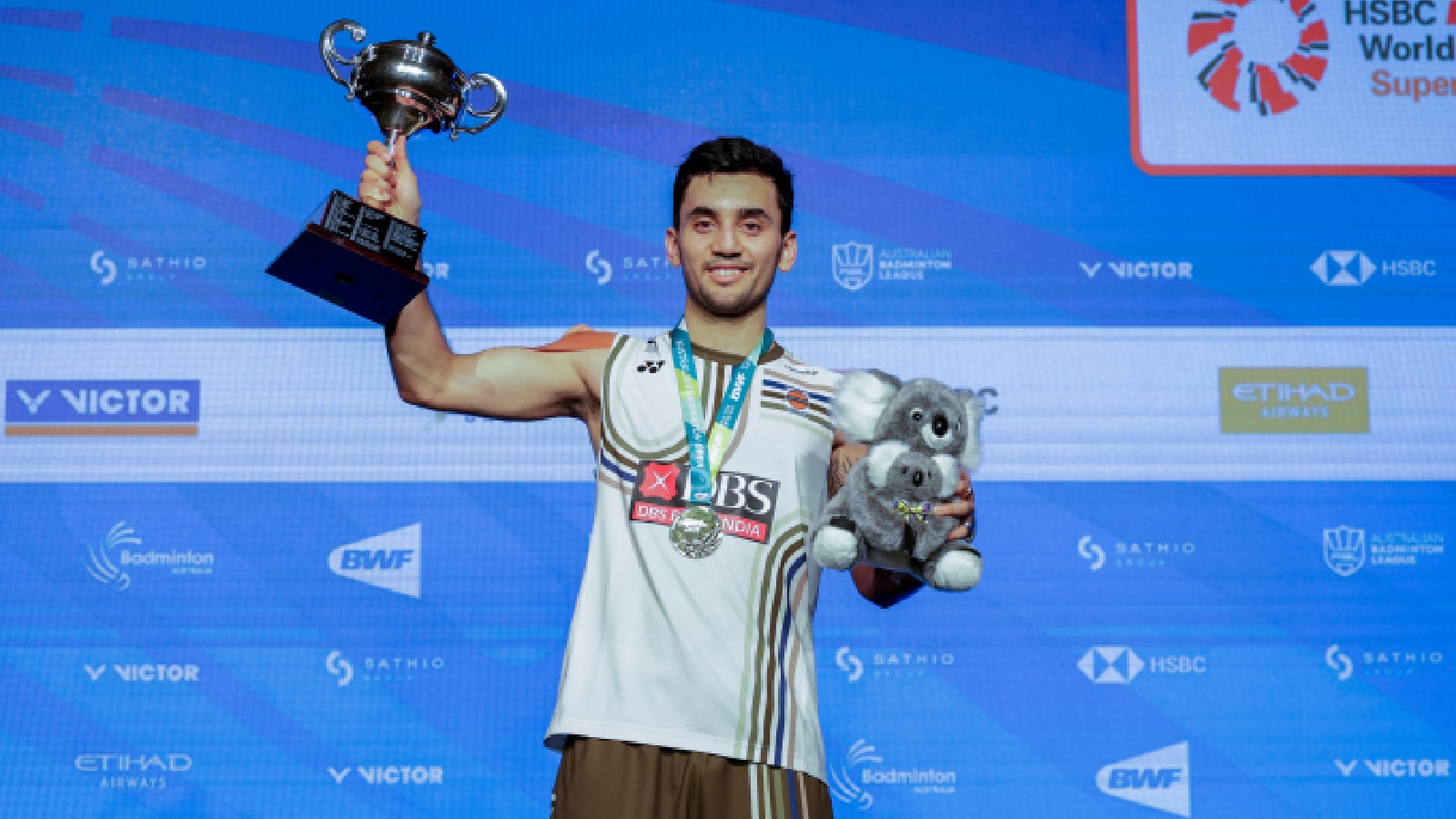
Lakshya Sen returned home victorious from the Super 500 Australian Open and one of the first things he did was check the engraving on his winners medal. “I got the right medal for men’s singles. Maybe they had extra men’s singles medals, and everyone was men’s singles winner,” Sen joked, talking to the media on arrival.
The confusion had begun when Malaysian world champion and winner at Australia Chen Tang Jie posted a picture on his socials with a glum frownie, asking Sen to check his medal, because the Malaysian had ended up with one that had ‘men’s singles’ inscribed on it.

Sen told the media about all things from developing a sublime mindset under Israeli mental trainer Mon Brockman (who had worked with HS Prannoy earlier) in Bangalore, to his ridiculously brilliant diving defensive retrieves – a habit he wants to get rid of – to improve longevity of his career.
Excerpts:
On whether he trains specifically for the diving saves that look dazzling, and bouncing back on his feet.
‘I actually train to avoid diving! I’ve been working on footwork and moving with the right step forward and sideways to play returns on my foot (and not scrambling on fours). Diving comes naturally to me. But if I have to have a long career, I can’t be doing those things at 30. There’s a lot of chance of injuries. When playing if the shuttle goes past you, you need to put in the dive and take it. But I train to avoid it.’
On his celebration gesture of blocking out noise.
‘There were a lot of doubts when I wasn’t playing well. And a lot of people had a lot of different opinions about my training. I respect those as well. But it was important to block everything. I told myself it will take time to win titles again. It was important to block doubts where you go either into past or future, and enjoy the process and do what’s important.’
 Lakshya Sen in action. (Badminton photo)
On coach Yoo Yong Song’s contribution to his technical / tactical changes.
Story continues below this ad
‘He told me after 3-4 years on the international circuit, people start reading your game. We’ve worked technically on bringing in more variations at the net and from back of the court. Like holding the shot a little at the net. I was not too worried about tech-tacs because skill doesn’t go away. It was about staying fit. We put together a plan for whole week, and set goals for next 2-3 tournaments. We also finetuned tactics for times when I was missing a few points in closing out games.’
On mental trainer Mon Brockman’s inputs.
‘Because I didn’t compete in lot of tournaments post-Paris mentally I had to let all those thoughts to go and being enjoying sport again. Injuries had kept me away, but I had to find motivation post Olympics. I took a break, results were also not that great. The mental trainer helped me to not think about past competitions and find motivation.’
On change in his mindset.
‘At some point I started feeling I had been in good shape at the Olympics (but couldn’t nail the medal), and was feeling a lot of burden of past losses. Finally I decided to sit back and think that if it takes 10 tournaments or 20 to get back to winning, it’s fine. I took that step back (from desperation of needing to win every week).’
On his patched-up back.
‘There’s a few niggles here and there in the back since Singapore and Indonesia (in June). I suffered back spasms due to high match intensity and needed good strength sessions and smart workload management. I also spent time in hospitals. Clinically nothing major, but need to care for the back.’
On what the comeback looked like.
Story continues below this ad
‘In the beginning of 2025 I struggled with injuries. By mid-year I felt fully fit and had a good training period before World Championships. I ficussed on physical aspects playing lot of tournaments. I worked every day to be fit from injuries. The ranking dropped and I wanted to be back in Top 10. I got the Korean coach ahead of All England and mental trainer around April. At Salzburg (Red Bull centre), I got good feedback on S&C and recovery.’